
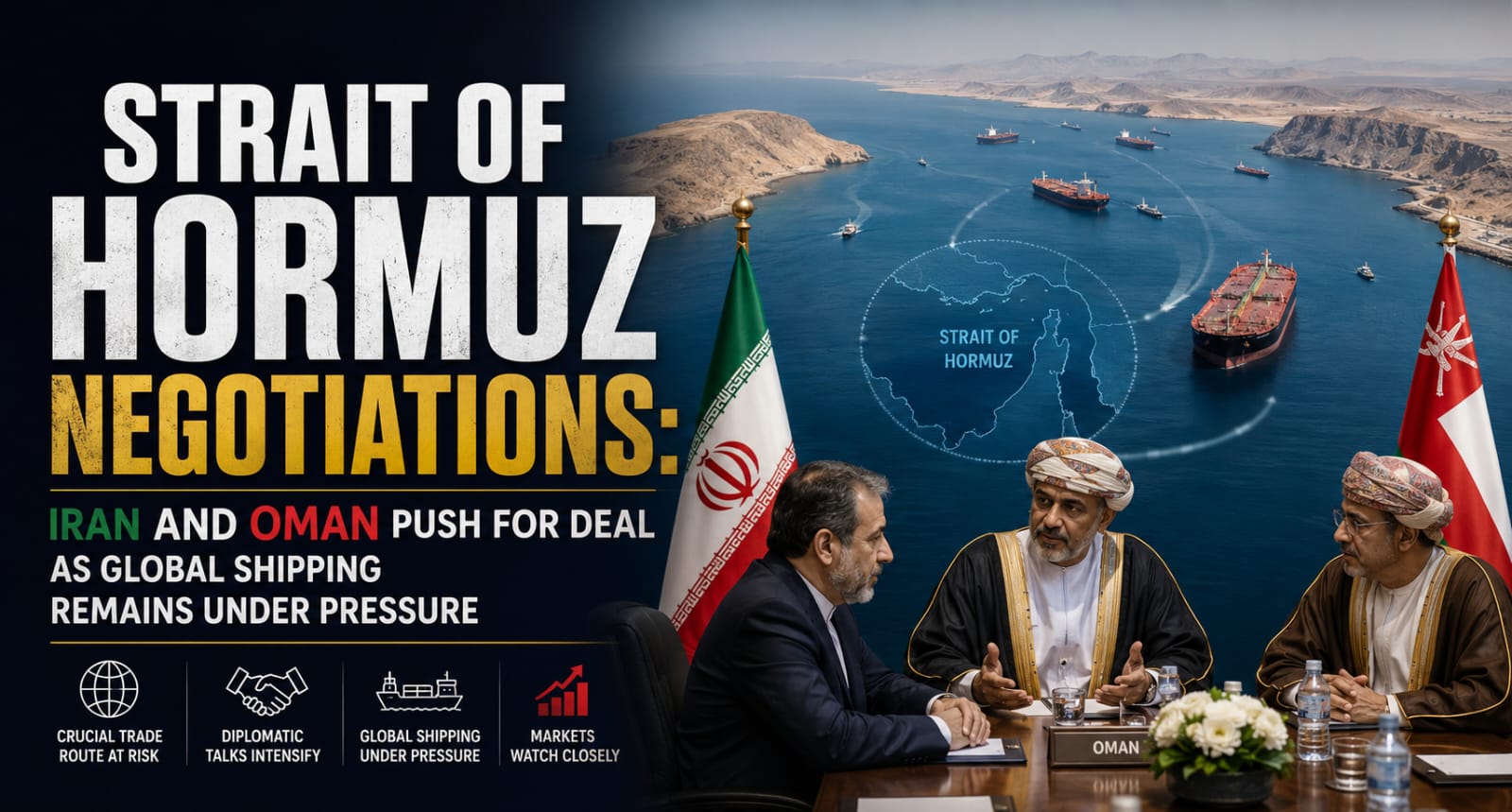
Negotiations over the Strait of Hormuz have entered a crucial stage as Iran and Oman work toward an arrangement aimed at restoring the movement of commercial vessels through the strategically important waterway. The discussions come amid continuing tensions between Iran and the United States, with the reopening of the strait increasingly linked to broader diplomatic and security demands.
The Strait of Hormuz is one of the world’s most important maritime routes, connecting the Persian Gulf with the Gulf of Oman and the wider Arabian Sea. Any prolonged disruption to shipping through the strait can have consequences far beyond the Middle East, particularly for global energy markets, shipping companies and countries that depend heavily on oil and gas imports.
Iran and Oman Discuss New Shipping Arrangements
Iran and Oman have been holding negotiations over a possible framework for commercial shipping through the Strait of Hormuz. According to recent reports, the two countries have made progress on the routes that vessels could use, with coordinates reportedly agreed as part of discussions aimed at creating safer and more predictable maritime traffic.
U.S. officials have also indicated that a deal between Iran and Oman could be reached soon. Washington has suggested that if the agreement is successfully implemented and Iran meets its commitments, the United States could take steps toward lifting its blockade of Iranian ports. citeturn0news16
However, the negotiations remain complicated because the issue is no longer limited to shipping routes. The reopening of the strait has become closely connected to wider disputes between Tehran and Washington.
Iran Links Reopening to Broader U.S. Demands
Iranian officials have indicated that reopening the waterway will depend on the United States taking several steps. Tehran has called for an end to military threats, the lifting of sanctions and the release of frozen Iranian assets, among other demands.
Iran has also sought compensation for damage caused during the conflict and an end to the U.S. naval blockade. These demands demonstrate how the Strait of Hormuz has become part of a much larger diplomatic confrontation between the two countries. citeturn0news9
The United States, meanwhile, has maintained that any relaxation of its pressure would depend on Iran fulfilling commitments under a potential agreement. This has created a difficult negotiating environment in which both sides are seeking guarantees before making major concessions.
Why the Strait of Hormuz Matters
The importance of the Strait of Hormuz extends well beyond the countries surrounding it. The waterway is a major transit route for energy shipments, including crude oil, petroleum products and liquefied natural gas.
A sustained disruption can increase transportation costs, raise insurance premiums and create uncertainty for energy markets. Recent concerns over the future of the strait have already contributed to volatility in crude oil prices, with oil prices rising amid renewed uncertainty over when normal shipping could resume. citeturn0news14
For Asian economies that rely heavily on energy imports from the Gulf region, developments around Hormuz are being closely monitored. Any prolonged restrictions could put additional pressure on fuel prices and supply chains.
Shipping Industry Faces Continued Uncertainty
While diplomats work toward an agreement, commercial shipping remains exposed to significant risks. Hundreds of vessels and thousands of seafarers have reportedly faced difficulties operating normally in the Gulf amid the ongoing security situation.
The disruption has also affected the wider maritime industry, with concerns over vessel movements, insurance costs and the safety of crews. Shipping companies are watching the negotiations closely because a diplomatic agreement could provide a clearer framework for restoring regular commercial traffic. citeturn0news12
For the industry, however, announcements alone may not be enough. A sustained increase in vessel traffic and a reduction in security risks would be important signs that conditions are genuinely improving.
Oman’s Diplomatic Role
Oman has emerged as a key intermediary in the latest efforts. The country has historically maintained channels of communication with both Iran and Western governments, making it an important player in negotiations that require indirect diplomacy.
The current discussions involving Iran and Oman could provide a possible pathway toward restoring commercial shipping while avoiding a wider military escalation. Gulf countries are also closely watching the process because stability around Hormuz is directly linked to regional economic and security interests. citeturn0news11
What Happens Next?
The biggest question is whether the negotiations can produce an agreement that both Iran and the United States are willing to respect and implement.
A successful deal could gradually restore confidence among shipping companies, reduce pressure on energy markets and lower the risk of further escalation in the region. However, unresolved disagreements over sanctions, military activity, shipping controls and economic compensation could still prevent a final settlement.
For now, the negotiations remain a significant diplomatic effort to stabilize one of the world’s most important shipping routes. The coming days will be closely watched by governments, energy companies and international shipping operators as they wait for concrete signs that commercial traffic through the Strait of Hormuz can return to a more stable and predictable pattern.